Tuesday, December 4, 2012

Nature Conservancy and easements

As you might expect the Nature Conservancy has quite a lot of interesting information about Conservation easements on their webpage.

Read their primer, see some examples or view the fast facts:

The Conservancy received its first conservation easement in 1961, on six acres at Gallup Salt Marsh in Connecticut. The conservation easement was a gift, valued at $300 at the time. The Conservancy still holds the conservation easement.

Google Funds Technological Advancements in Conservation


An interesting paradox has been observed recently that efforts to protect a species by changing its status on endangered lists significantly increases its illegal market price, which actually boosts its desirability to poachers. Some people have even suggested that we refrain from listing species in scenarios where this may happen until we have appropriate protections in place. However in many cases there is simply not enough money, technology and manpower available to provide decent protection. This may be soon to change though as technology becomes forever cheaper and public awareness of conservation slowly improves.

Today Google gave the World Wildlife Fund (WWF) a grant of $5 million to put towards fighting poaching using state-of-the-art technologies such as remote aerial surveying, specialized sensors and new tagging methods. Coupled with new patrol systems it is hoped that these technologies can provide more effective protection against global poaching networks, which are becoming increasingly more sophisticated. The trafficking of wildlife is estimated to be worth $7-10 billion per year so this is clearly not going to solve the entire problem, but hopefully it can provide a solid base from which further anti-poaching efforts can build.

Monday, December 3, 2012


        I found an article about how local perceptions and awareness of conservation impacts conservation efforts of coral reefs in Belize.  This paper starts by explaining how ecotourism can be beneficial to the coral reef ecosystems as well as the local people.  Tourism provides income for people (for example tour guides can charge tourists to take them out on snorkeling and boat tours).  Before Belize became a popular tourist hotspot, local communities relied primarily on fishing as their income but now that tourism is now a main source of income for many local households, economic pressures to overfish have decreased.  The money made by ecotourism also has been put towards creating more marine protected areas (MPA’s) as well as educating tourists and locals about the importance of conservation of marine ecosystems in Belize.  Conversely, tourism can also have negative impacts on coral reef conservation such as “pollution, direct contact of tourists, anchor damage, and sedimentation from coastal erosion and over-development” (985).  Interviews and surveys of locals’ perceptions of conservation were conducted in this paper and indicated that people living in coastal communities that had less tourism believed coral reefs should be protected for intrinsic reasons such as beauty, however people living in communities with heavy tourism said they should be conserved because it provides a source of income.  This study also found that fishermen’ support for protection of marine ecosystems is positively correlated to tourism development.  Fisherman in the study did not feel that tourism was having a negative impact on their lives.  This paper concludes that as long as government policies continue to direct benefits to local communities, conservation efforts will continue to protect coral reefs in Belize.  He warns that pollution mitigation must improve and impacts of tourism must be limited so that negative impacts on the ecosystems do not degrade the coral reefs.

Reference: Diedrich, A. (2007). The impacts of tourism on coral reef conservation awareness and support in coastal communities in belize. Coral Reefs, 26(4), 985-996. doi:http://dx.doi.org/10.1007/s00338-007-0224-z

Conference of the Parties XI

The eleventh meeting of the Conference of the Parties (COP 11) was held in Hyderabad, India, from 8 to 19 October 2012.

From the press release on the final day:
 
The world’s governments have agreed to increase funding in support 
of actions to halt the rate of loss of biodiversity at the eleventh meeting of the Conference of the Parties to the United Nations Convention on Biological Diversity, which ended today.  
  
Developed countries agreed to double funding to support efforts in developing states towards meeting the internationally-agreed Biodiversity Targets, and the main goals of the Strategic Plan for Biodiversity 2011-2020.

This doesn't include the United States of course...

Sunday, December 2, 2012

Poverty and Biodiversity Conservation Issues

One of the major concerns in preserving biodiversity is the effect that impoverished nations have upon their environments. In many instances, areas with a large amount of biodiversity tend to have some of the poorest human populations, but with the highest population growth. As we are all aware, the greater the population of a nation, particularly without certain restrictions to the use of natural resources, the more damaged the environment becomes, resulting in a drastic decline in the number of species present. One of the struggles for impoverished nations is justifying the protection of species when the people themselves are either unable to support themselves, or must compete with those species to obtain/ maintain resources. An example can be seen in the article titled "Human-wildlife conflicts over 
food and water in Tanzania." It describes some of the conflicts between the peoples of several rural communities located near wildlife reserves, where several species of large mammals tend to have a negative impact upon the amount of crop harvested. Species such as elephants, hippos, and warthogs frequently leave reserve grounds and will consume part of a field, leading to a loss of productivity for the farmers. Because of the economic loss, many of the locals find it difficult to sympathize with those species that may be harming them. As a result, some of the species will not receive the protections  necessary for their survival.
As stated in section, one of the primary ways that both issues of poverty and biodiversity conservation can be attacked is through greater education, which will most likely need to come from outside sources because of the general lack of available instruction from  members of local communities. By having a more informed population, it is more likely that the people of those communities will recognize the importance of biodiversity for the environment as well as their own economic interests. Another offered solution is the investment of an impoverished countries to develop their eco-tourism industries to bring in more foreign tourists, who in turn will support the local economy through purchases of guide services and of course souvenirs. While this appears to be a simple solution, it takes years of hard effort and resources to sufficiently alter a nation's perspective on environmental issues, and as the world becomes more stretched for natural resources, we will likely only see the continuation of this struggle long into the future.
For more interesting examples of efforts taken by some nations to mediate poverty with wildlife conservation, the same page the article mentioned above has a few more articles discussing the matter See the page here...http://www.dfid.gov.uk/R4D//PDF/Outputs/IDS/id21Conservation_7.pdf.

Predicted Effects of Increased CO2 Concentrations in Our Atmosphere

-->

 Predicted Effects of Increased CO2 Concentrations in Our Atmosphere

At the start of the industrial Revolution, around the year 1800, the amount of Carbon Dioxide in our atmosphere was about 280 parts per million by volume (PPMV). In the year 2000, carbon dioxide levels reached 370 PPMV and each year the amount of carbon dioxide in our atmosphere rises and with increases of CO2, the temperature on our earth rises as well. The increase of CO2 levels is due to things such as the burning of fossil fuels, deforestation and cement production. There are many negative effects that the increase of CO2 will have on our Earth. 
Several predictions have been made about the effects that CO2 will have on our earth. The first being that the average sea surface temperature will raise about 4 degrees Celsius by the year 2100. Currently the average sea surface temperature is 2 degrees Celsius, but 2100 it will be 6 degrees Celsius.
The next prediction is that there will be an increased frequency and intensity of hurricanes due to the rising temperature of our atmosphere.
Next, there will be a rapid increase in sea level. Recordings from 1880-2000 have shown gradual increases in sea level each year. The sea level rose about 20 centimeters from year 1880 to year 2000.
Increased concentrations of CO2 in the ocean cause the ocean to be much more acidic than it normally should be. The dissolved CO2 combines with water to form carbonic acid, which reduces bicarbonate ions and increases the amount of hydrogen ions. Bicarbonate ions are needed for calcification in coral reefs and on the external bodies of many oceanic organisms. When the ocean becomes too acidic for calcification to occur, there will no longer be any coral reef communities and a large fraction of organisms that have calcium carbonate structures will be wiped out because they will dissolve. Increases in water temperature will also cause coral reefs to die, as they can only tolerate minor fluctuations in temperature.


                                                         Works Cited

 Schmitt, Russell. "Climate Change." EEMB 142A Lecture and Notes. Letters and Science Building 1001, Santa Barbara. Lecture.

Soon, W., Sl Baliunas, Ab Robinson, and Zw Robinson. "Environmental Effects of Increased   Atmospheric Carbon Dioxide." Climate Research 13 (1999): 149-64. Print.


Link to this article:
www.int-res.com/articles/cr/13/c013p149.pdf

Shipbreaking


I mentioned shipbreaking a while ago when we talked about economics and the export of pollution. I have posted this before but I think it's worthy of a repeat because the investigative reporting series is an excellent read.

Following the Exxon Valdez oil spill in 1989 there has been increased pressure to phase out the vulnerable single-hulled ships and replace them with safer double-hulled tankers. This might seem like a good idea but the problem comes about when the old ships are broken up. A single oil tanker can contain literally tons of toxic material (eg 7000 kg of asbestos) and when these ships are broken up in developing countries, the workers have virtually no protection from toxic, and other, hazards, and the waste itself often ends up on the beach or in the ocean.

A series of articles on the international shipbreaking industry by Gary Cohn and Will Englund of The Baltimore Sun won a Pulitzer prize in 1998 and you can read the series here. The article on Alang in India is perhaps the most relevant.

The photographer Edward Burtynsky brought this industry to many people's attention with a stunning series of Shipbreaking photographs. The one reproduced above looks like a scene from the Trojan war but these are in fact some of the world's largest ships being disassembled, largely by hand, in Chittagong.

I think the sad moral of this story is that one apparently simple change (a move to safer ships) can create a toxic nightmare in a number of poor countries.

Saturday, December 1, 2012

Poachers Turned Stewards of the Land


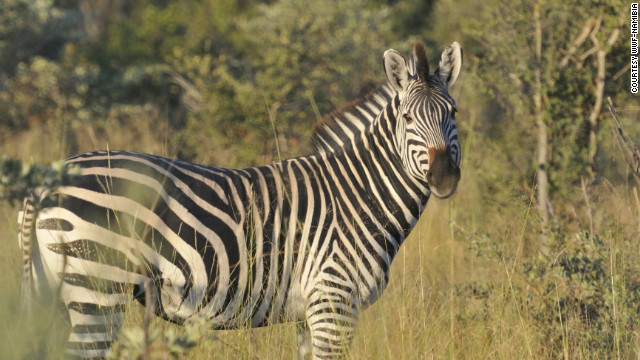
Namibia’s wildlife was on the brink of extinction when land ownership and fauna were turned over to non-native owners in the 1960’s. Indigenous Namibians were forced out of their land onto previously protected reserves and began poaching gazelles and zebras to keep their families fed though it was illegal.
There was a turn of events when poachers were asked to protect wildlife instead of hunting them. These people were skilled at tracking fauna and now they were receiving income for it. The numbers for it today shows favorable outcome in this “game guard” system.
The country currently hosts the world's largest population of free roaming cheetahs and black rhinos (where once they teetered on the edge of extinction). In the last decade, the elephant population has risen from around 13,000 to 20,000. In the northwest of the country, where lions were down to under two dozen, they now total roughly 130.
People on the land realized that wildlife was more beneficial alive than dead. Economically, the benefits came from venture tourism and trophy hunting. Inevitably, controversy arose around the legality of trophy hunting form animal rights activists, but the conservancy saw benefits.
Chris Weaver, head of the WWF-Na, said, “From my perspective, we're trying to conserve the species, not the individual animal, and this creates a benefit when it's done in a well-regulated fashion, and the benefits go to the local community."
Thoughts? For the full article please click here!
How Namibia turned poachers into gamekeepers and saved rare wildlife
By Daisy Carrington, for CNN. Tue October 23, 2012

Not so fair game

Chicago Tribune, November 16th 2012: Killing of wolves from Yellowstone outside park triggers outcry.
Seven wolves that once lived in Yellowstone National Park have been shot and killed by hunters in recent days, triggering an outcry among conservationists and businesses that depend on the park's prized wolf packs.
The wolves, all radio-collared as part of a park research program, were legally hunted outside Yellowstone boundaries after hunting seasons opened earlier this year in Idaho, Montana and Wyoming.
The deaths have no adverse effect on a park wolf population estimated at 88, said Dave Hallac, chief of resource management and science for Yellowstone.
Because it's hard to imagine that the loss of 8% of the population in a short time frame could have an adverse effect. If we only had some way to look at this scientifically...
Wolves last year were removed from the endangered species list in Idaho and Montana, states that liberally allow shooting and trapping. Wyoming wolves were removed from the list on September 30 and hunted from the next day.
While hunting is banned in Yellowstone, wolves that cross the unmarked boundary into parts of Idaho, Montana and Wyoming are fair game. 
You think there'd be something in the middle. One day you're endangered and protected, next day you're 'fair game'.

Friday, November 30, 2012

Guest Speakers #2

Sorry I couldn't be there today. Here is some contact information for our two speakers.


Lisa Stratton is the Director of Ecosystem Management at the Cheadle Center for Biodiversity and Ecological Restoration. You can find contact details and information about internships and other opportunities.


Cristina Sandoval is the Reserve director at Coal Oil Point Natural reserve. Her contact details and volunteer opportunities are available on the website.