Friday, October 21, 2011

The Paradox of Value

I had been hoping to focus my blog on the Anthropogenic Allee Effect since first hearing about it in lecture. What a crazy thing for mankind to do; discover rarity and push it to the limit—simply for the fleeting thrill of the hunt, joy in the exotic treasurer, or satisfaction with a complete collection. So with already a few opinions on the nature of my fellow man, this trend had me intrigued, a little irritated, and ready to learn more.

In case you don’t quite remember what the Anthropogenic Allee Effect (AAE) is, Courchamp et al. describe it in their article as, “The value attributed to rarity in some human activities that could precipitate the extinction of rare species.” There they list six different human activities that do, or have the potential to, induce an AAE. These are: Collections, Trophy Hunting, Luxury Items, Exotic Pets, Ecotourism, and Traditional Medicine. All of these activities place value on species that are exceedingly rare and, in doing so, continue to add to the their rarity as they take organisms out of their natural habitat for their own interests. Examples we discussed in class, and are mentioned in Courchamp et al.’s article, include Big Horn sheep—which hunters may pay up to $400,000 to hunt! and the Napoleon wrasse, which is highly valued for its uh, delicious?? lips.

But the Anthropogenic Allee Effect is not only a threat to the most charismatic and emblematic species, but also to the most inconspicuous invertebrate, as long as rarity renders it fashionable to exploit for one reason or another (Courchamp et al. 2006).

The consequences of the AAE are ultimately disastrous. If rarity continues to be the most desirable factor, then eventually everything will go extinct! And then where will we stand? Happy to collect cockroaches perhaps?

To learn more about the Anthopogenic Allee Effect or the Napoleon wrasse, please check out the sites listed below.

Courchamp F, Angulo E, Rivalan P, Hall RJ, Signoret L, et al. 2006 Rarity Value and Species Extinction: The Anthropogenic Allee Effect. PLoS Biol 4(12): e415. doi:10.1371/journal.pbio.0040415

http://www.plosbiology.org/article/info%3Adoi%2F10.1371%2Fjournal.pbio.0040415

Humphead Wrasses Awareness Campaign. The Humphead Wrasse. IUCN and Species Survival Commission. Web. 9 Aug. 2011. http://www.iucn.org/about/work/programmes/species/about_ssc/specialist_groups/directory_specialist_groups/directory_sg_fishes/groupers_wrasses_sg/hhw_gwsg_home/

Photo credit:

Darren JEW/WWF-Canon. http://www.worldwildlife.org/species/finder/humpheadwrasse/humpheadwrasse.html

Thursday, October 20, 2011

Just who is native?

In the headlines, well the local headlines anyway, this week is the final  removal of elk and mule deer from Santa Rosa Island.

The restoration of the Channel Islands has been a controversial story that has led to some fierce local opposition to the Park Service's culling program. Animal rights advocates have often found themselves on the opposite side of this conflict to conservation biologists.

“The distinction between native and nonnative as defined by the Park Service seems to be arbitrary — animals before Columbus’s arrival are okay, but those after are not okay. All of these creatures have been here long enough to call Santa Rosa Island home, and have been as essential to the place as the Torrey pines and the island foxes.”

I think in this case the distinction is fairly clear and the elk and deer were brought to the island relatively recently by man. However the quote above raises an interesting question; especially on islands, where every species is an immigrant, how long does a species have to have lived there before it is considered native?

Biofuels and Tropical Deforestation


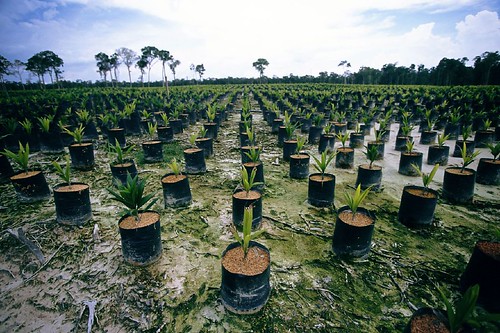
As our exceedingly large population continues on its exponential path and our finite resources are being consumed, the need for renewable resources bears greater weight. Unfortunately, with an increased pressure on agency officials and corporate heads comes a dangerous tendency to settle on a quick-fix. One such situation is the proposed ‘solution’ to be found in biofuels.

While biofuels have been shown to burn cleaner, emit less particulates, and cost significantly less than imported oil, the environmental costs are often overlooked. Palm oil, the “world’s leading vegetable oil,” has quickly gained popularity as a biofuel; in 2010, the “largest biofuel plant in the world,” an oil palm plantation/refinery, was established (Wikipedia, Palm Oil). The growth of oil palm plantations, however, has a direct correlation with the destruction of tropical rainforests. With “more than 50,000-sqare miles of moist, tropical lowland areas” already occupied by oil palms, deforestation via plantation development has been deemed one of the “biggest ecological impact[s]” on diminishing biodiversity. Where oil palms have replaced rich forests, less than a sixth of the species found in primary forests are present. One of the biggest victims of this habitat destruction is the Orangutan, who is now identified as "critically endangered" by the IUCN. What’s worse is that “degraded forests, and even alternative crops…supported higher numbers of species” than the oil palm.

Unfortunately, demand for biofuel is “increasing rapidly”—more rapidly
than we are addressing the issue. In the case of wildlife, it seems that there is little to be done for those already within the plantations, so the best strategy is to simply avoid the proliferation of plantations onto valuable, rich land. However, in finding new places for these plantations to reside, one must consider the “careful distinction between degraded land that is of low conservation value…and partially logged or degraded forest areas which can still harbor relatively high levels of biodiversity.” In any case, it seems as though we need to approach ‘solutions’ with greater caution and thoroughly asses the pros and cons of any alternative before jumping on the ephemeral bandwagon.


Fitzherbert, Emily et al. "How will oil palm expansion affect biodiversity?" Trends in Ecology and Evolution
23.10 (2008): 538-545. ScienceDirect. <http://www.sciencedirect.com/science/article/pii/S0169534708002528>

"Oil palm plantations are no substitute for tropical rainforests." PHYSORG. N.p., 15 Sept. 2008.
<http://www.physorg.com/news140693440.html>

Photos:
http://www.designsigh.com/2009/04/borneo/
http://www.commercialpressuresonland.org/press/palm-oil-land-grab
http://www.flickr.com/groups/35468158660@N01/discuss/93944/

White-Nose Syndrome Threatens North America's Bats

Threats to biodiversity can come in unconventional packages. Currently, conservation biologists are trying to unravel the mysteries of white-nose syndrome (WNS), a pervasive fungal infection spreading its way through New England’s bat populations (Left, a Little Brown Bat, Myotis lucifugus, infected with WNS). WNS was first documented in Albany, New York in 2006. Since then it has been responsible for the deaths of over a million hibernating bats from 2006-2009 (Blehert et al., 2009, and Sebastien et al., 2011). It remains to be seen if WNS is only a symptom of another disease or is actually the causative agent of mortality. However, the lack of evidence for any other pathogen strongly hints to the deadly power of this fungus, newly christened Geomyces destructans (Sebastien et al., 2011).

G. destructans infects the face, nose, ears, and wings of bats as they hibernate, driving hyphae deep into the cutaneous layer, hair follicles, and sebaceous glands (Blehert et al., 2009). While the physiology of pathogen is not well studied, it is apparent that fungal infection rapidly depletes fat reserves (Blehert et al., 2009). Tactile irritation combined with altering water balance of the bats may cause them to rouse from hibernation too frequently, resulting in decrease in fat reserves and death by starvation (below, a map of WNS occurrence as of 2010) (Sebastien et al., 2011).

It is a mystery where G. destructans comes from, although the fungus has been found in association with European bats without mass mortality (Sebastien et al., 2011). This could make G. destructans a dangerous invasive species, or it is possible that a North American Strain recently evolved a higher virulence (Sebastien et al., 2011). Transmission occurs through bats coming into contact with spores that remain inactive in roost sites.

Despite incomplete knowledge, WNS has such a drastic effect on bat populations that measures to contain and minimize the spread of infection must be taken immediately. Globally, bats play important roles in local ecosystems such as insect consumption, flower pollination, and movement of seeds. Allowing such a disease to go unchecked would be a disaster to North America’s bat diversity; steps must be taken to understand this new phenomenon.

Reference Links:

http://www.plosone.org/article/info%3Adoi%2F10.1371%2Fjournal.pone.0019167

http://www.sciencemag.org/content/323/5911/227.short

Lineage Loss in Cheetahs

As with most species, there are many different reasons for the cheetah being endangered. Habitat loss, high cub mortality from predation, and abnormalities due to inbreeding are just some of them. This journal paper by Marcella Kelly from UC Davis (Go Ags!) looks at the lineage of Serengeti cheetahs. These cheetahs have a small population and with that comes a few consequences that Kelly mentions. The effective population turns out to be only 15% of the original when fluctuation population size, unequal sex ratio, skewed distribution of lifetime reproductive success, and heritability were included. As discussed in lecture, small populations like that of the cheetah's are susceptible to many negative effects. Such effects include the increased likely hood of diseases wiping them out, increased deleterious alleles, and, as mentioned before, essentially reduces the effective population size. Under IUCN the cheetahs were listed under vulnerable, although I noticed conflicting opinions.

Wednesday, October 19, 2011

The Cheetah: An Example of Genetic Bottleneck

Today, the small remaining cheetah population remaining in Africa faces many pressures which threaten the continuing existence of the species. Cheetahs first evolved in North America over 8 million years ago and dispersed around the globe over time, evolving into many different species and subspecies. 12,000 years ago during the last glacial maximum, large glaciers caused cheetahs to become locally extinct everywhere except for Africa. However, the few surviving cheetahs all shared similar genetics, creating a genetic bottleneck within the population. Genetic bottlenecks threaten a population due to the many complications of inbreeding, which include more common defects and less resistance to disease. The idea of cheetahs experiencing a genetic bottleneck has been tested scientifically. Results from testing cheetah DNA indicate that the cheetah did in fact experience a genetic bottleneck 12,000 years ago (Menotti –Raymond and O’Brien, 1993). In addition to the challenges posed by low genetic diversity, the cheetah also faces pressures from an increasingly fragmented habitat, and competition for food from both humans and other large cats.

Work cited:

Menotti-Raymond, M. "Dating the Genetic Bottleneck of the African Cheetah." Proceedings of the National Academy of Sciences 90.8 (1993): 3172-176. Web. .

Work Referenced:

Gugliotta, Guy. "Rare Breed | Science & Nature | Smithsonian Magazine." History, Travel, Arts, Science, People, Places | Smithsonian Magazine. Web. 19 Oct. 2011. .

Tuesday, October 18, 2011

Greenwashing

The post below reminded me of this post I made last year, after a somewhat depressing visit to Las Vegas for a wedding, about Greenwashing.

Greenwashing, if you aren't aware of the term, is when a company uses deceptive marketing to promote the perception that a company's policies or products are environmentally friendly. It is, sadly, so common it is the rule rather than the exception these days. The Green washing index at the University of Oregon allows you to post and rate company ads according to their Greenwashing index. You can look at ads that other people have rated and you can see those rated authentic and the worst offenders in greenwashing. I don't think the site is especially user friendly but it allows you to sort and view ads in a number of ways. For example you can select ads by category (eg choosing the automotive category) and then sort the ads by those currently rated worst in this category.


http://www.cartoonstock.com/newscartoons/cartoonists/smm/lowres/smmn18l.jpg

As our world is increasing in population, our natural resources are becoming more and more scarce. Lately it is becoming a bit of a fad to be eco-friendly or eco-groovy, but sometimes in the wrong way. For example, in this cartoon, the power that is being used for the gasless car is coming from a not so eco-groovy power plant that is dumping toxic waste into a landfill. Maybe she should be riding a bike instead. Of course, not all eco-groovy earth saving activities are bad for the environment, but it is important to truly live the part and not just do it half heartedly.

Sunday, October 16, 2011

Rapid Assessment Program: A Conservationist's Dream Job

http://www.conservation.org/newsroom/pressreleases/Pages/20_Years_of_RAP_Still_Counting.aspx

For anyone looking into a career in the scientific aspect of conservation, Conservation International’s Rapid Assessment Program has got to be an appealing choice. Conservation International (CI) is a world renown conservation organization based in Arlington, Virginia. Founded in 1987, CI’s mission statement is something along the lines of “Building upon a strong foundation of science, partnership and field demonstration, CI empowers societies to responsibly and sustainably care for nature, our global biodiversity, for the well-being of humanity.” In 1990, CI founded the Rapid Assessment Program, more commonly known as the RAP. The description provided by CI’s website adequately describes just how badass the RAP is: “An ecological SWAT team that could accurately assess the health of an ecosystem in a fraction of the time it would normally take". Who wouldn’t want that job?

RAP operates in teams of 10-30 of top field biologists, bringing together many different strengths and specialties. These teams travel to the most remote, threatened, and biologically diverse areas of the world with one goal in mind: Find and describe as many species as possible. In a short but intense three to four weeks, these scientists find and catalog hundreds of species to get an idea of how biologically diverse an area is, and how this diversity is threatened. Then, back at the headquarters, they frantically prepare their reports and articles and use the data they gathered to help CI plan their conservation efforts more strategically. This program has been described as the most effective and powerful conservation tool of our time.

An ecological SWAT team. I still can’t get over it. That is perhaps the best description of any nonprofit organization ever. How awesome would it be to have that job? I can only hope my future will bring me closer to realizing this dream. Not only do these biodiversity defenders form a very effective and highly respected conservation effort but they also contribute largely to the academic field of biology. Since their founding, scientists working on rapid assessments have discovered over 1300 new species. For the size of this small program, this is a hugely impressive number.

As if this doesn’t sound good enough already, there is the icing on the cake: Travel. As a scientist in the RAP, you get to travel to the most beautiful and remote places in the world. This job often takes you to places that have never been walked by modern humans. Even better, these places are home to wildlife that have never been seen by modern humans. Although some scientists are required to live permanently in these remote locations for their work, an RAP scientist spends a perfect three weeks in the wildest places left, among the wildest of wildlife, and, most assuredly, with the wildest of coworkers.

The only thing is, you have to live in Virginia the rest of the time.


Posted by Kai Atkinson

Saturday, October 15, 2011

Cute but sad

Penguin Jumper in 8ply  - Must be 100% Wool Yarn
1 pair 3.25mm , 1 pair of 3.75mm needles , 1 set of 3.25mm dpn’s or circular
Cast on 36 stitches using 3.25 needles.K1, P1 to end of row. Repeat this row 7 times.  Change to 3.75mm needles and K2, P2 rib. Work 4 rows increasing at each end of every row. (44 sts)
Continue until work measures 15 cms.
Decrease 1 st at each end of every row until 28 sts remain.
Decrease 1 st. in middle of next row (27 sts.)
Leave on needle.
Make second side the same.
Transfer the 54 sts from both pieces to 3 of the set of 4 3.25mm needles.(18 sts on each.) and work a round neck in K1 P1 rib for 10 rows.
Cast off.
Stitch up sides to decreasing to 27sts (opening for flipper). Add elastic to the top and bottom to prevent the penguins getting out of them. Top: 15cm of elastic; bottom 17 cm (knots allowed). Flat elastic OK.


In case you didn't hear New Zealand is suffering one of its worst ecological disasters as a heavy container ship ran aground and spilled heavy fuel oil into some pristine habitats. A New Zealand yarn store is helping relief efforts by collecting penguin jumpers (sweaters if you are American).

Skeinz has been asked to help with the penguin relief by knitting small Penguin PJ’s to help protect the birds & prevent them from preening their feather & ingesting the toxic oil. 
 
It's probably not worth posting them from the US unless you knit a lot of them.

It sounds like penguins are one of the success stories of the rehabilitatuon effort:

Yet there have been success stories, particularly treating little blue penguins -- the smallest species of the flightless birds, which have responded well to treatment for oil contamination.
"Throughout the day they're fed, they're swum, and generally taken care of and loved to death," Conayne said, standing before a small swimming pool converted into a makeshift penguin watering area.
The birds usually have a feisty nature and are behaving as normal, she explained. "The penguins are trying to tear people to shreds, so that's really good."