Friday, November 9, 2012

Mexico's Axolotl Salamander is Disappearing


One of the most charismatic amphibians, the Axolotl salamander (Ambystoma mexicanum), are struggling on the brink of extinction. This species claim to fame is it never leaves the larval tadpole stage that other salamanders progress through. They retain two sets of feathery gill appendages sprouting from the neck, giving them a goofy and alien appearance, like something out of Pokémon. Endemic to the” lakes” and water systems surrounding Mexico City, this salamander had a cultural value to the Aztecs as well as the current people. They were part of the Aztec diet and today are used in a folk remedy. Scientists are also using a captive population to study their regenerative properties. This captive population has flourished but natural populations are suffering a heavy decline.
Urbanization has decimated the aquatic systems surrounding Mexico City. Sewage, fertilizer, and trash are constantly being pumped into small waterways, this salamander’s preferred habitat. People don’t seem to care what goes into the water. According to a count performed in 1998 and then a decade later, only one in 60 survived. The Mexican government also dealt the Axolotl a bad hand by introducing nonnative fish, Tilapia and Asian Carp, to the canal system. This was done in an effort to feed the large poor population that borders the salamander’s habitat. These fish are reproducing out of control. They eat the plant that provides the preferred breeding grounds for the Axolotl as well as the young.
            The preservation of this species has provoked a debate in the scientific community. The intense habitat degradation and introduced fish seems like an unfix-able situation so some scientists are advocating creating new populations away from the city. Others disagree, stating that the presence of the Axolotl is vital to the ecosystem, as it was top predator before the fish. If the population were to flourish, it would indicate a healthy ecosystem. Dr. Zambano is behind this argument. His solution is two pronged, supporting safe agriculture practices and creating “tilapia-free” zones with special barriers. He has seen some success but on a small scale. Others are testing the viability of raising the salamanders in captivity and letting them back into the canals at a safe size. This has also shown promising results. Only time will tell if these fluffy slime monsters will make it.

Link to the article:

Wildlife Linkages Workshop

Saturday November 10th: 9-1pm - CCBER Classroom:
 
Document and Share your wildlife observations and photographs, learn about tracking, remote camera use, new websites and see more of Barry Rowan's amazing photographs of Bobcats in Goleta!

Schedule:
9-9:30: Introduction to wildlife corridors in semi-urban areas and the Cheadle Center for Biodiversity and Ecological Restoration (CCBER)'s Wildlife Linkages Program - Citizen Scientist Documentation   Meghan Walla Murphy,  Lisa Stratton

9:30 -9:50 - See Barry Rowan's amazing Bobcat Photos from Lake Los Carneros and get insider tips on Wildlife Photography

9:50 - 10:30: Share your Photos and Observations:  Bring your photos on a flash drive for projection, write your observations on the data sheets, circle hot spots on a map, talk with other observant neighbors about the rewards and challenges associated with wildlife in our open space areas and back yards. - Mark Holmgren

10:30 - 11:00 - Facilitated discussion about the value of preserving and enhancing wildlife connectivity in Goleta area. Pro's, Cons, Hot Spots! 

11:00 - 11:30 - Tracking 102 - Led by Tracking expert: Meghan Walla-Murphy

11:30 - 1pm - Field Trip to local tracking hot spots with Meghan.

RSVP to wildlifelinkagesproject.ca@gmail.com

Location:  Rm 1013 Harder Stadium South, CCBER, UCSB.

Cost -- parking fee ~ $5 at the blue kiosks, Lot 30, UCSB

Sponsored by Coastal Fund and Santa Barbara Foundation

Ecological overshoot and extinction debt


SATURDAY, SEPTEMBER 29, 2012

Ecological overshoot and extinction debt

We have wiped out plenty of other animals. Ourselves as well?

With all the discussion of the Federal debt, another far more momentous debt is being ignored- the debts we are building up in the biosphere. Two papers discuss aspects of these debts, one about how to account for extinctions that have not happened yet, but which we have baked into the cake, and the other ageneral perspective on how badly we are living beyond our means overall.

Extinctions are extremely saddening to a biologist. They mark a loss of riches, of wealth, which is very unlikely to be made up. We are in the middle of one of the most severe extinction episodes in the history of life, entirely brought about by us. It will take tens of millions of years after our passing for earth to re-cover itself with new versions of the ecological complexity that humans have so greedily and thoughtlessly eradicated. That is, if we ever manage to give the biosphere any breathing space at all.

How bad is it? The paper on extinction debts, which focuses on the Amazon, notes that 80% of extinctions due to historical (past) habitat loss have yet to occur. This is because extinction takes some time to play out. When we are down to the last whimpering dodo bird, or carrier pigeon, or woodpecker, orcondor, we are at the end of long process of habitat destruction, eradication, and ecological simplification.

Even if we care, it takes heroic efforts to keep such species on life support- efforts which often fail because there just isn't enough habitat left anywhere, or a lack of other conditions. The condor of Calfornia remains in doubtful condition because of continual destruction by electric wires and lead ammunition, among other problems, meaning that its status is by no means assured. And with the extremely small population sizes possible after even this effort, the long-term genetic prospects of such species remain quite bleak.Other vultures are in even worse condition.

No, the way to save species is to actually save habitat, on large scales and protected conditions that preserve the compelete ecosystems on which those species depend. Here is their estimate of extinctions in the Amazon, under business as usual conditions, only among vertebrate species:


Turning to humans, how bad is it for us? Even if we deny any moral or aesthetic interest in the preservation of other species, we are a species too, and we have been generating a debt of our own, eating ourselves out of house and home. The other paper (from 2002) catalogs humanity's consumption of various biosphere services, and concludes that we are using more (1.2 fold more at the time) earths than we currently occupy, suggesting that in the business-as-usual future, we will not only see our growth slowed, but will see a sharp reduction in living standards and/or population levels, due to the ecological overshoot we are currently committing. As with extinction debts, the full cost of over-consumption can take time to show up, with a population crash the typical result.

Our living standards have already been going down for some time. My run-of-the-mill house is made of extremely dense timber that would be virtually unobtainable today. Typical construction timber is no longer old-growth, but plantation-grown pine and fir that resemble balsa wood more than oak. Fish are smaller and scarcer, with many stocks utterly fished out. Peak oil is here, and price pressures are starting, ever so slowly, to change US living habits.

The researchers looked at our gross areas of environmental impact- farming, livestock raising, timber cutting, fishing, land use for habitation and industry, and CO2 emission. We use 0.28 earths for farming, 0.15 earths for timber harvesting, and 0.61 earths for our unsustainable CO2 emission. We use 0.18 earths for the other categories, totalling to well over one earth overall- numbers that have surely grown as Asian economies have developed pell mell.

Now, this computation is a bit fanciful, mostly a way to talk about the unsustainability of our current practices. Economics would claim that we can smoothly substitute or innovate our way out of any critical shortages. But the end of a fish stock is really an end. Our living standard goes down with every loss of this kind, both in market/consumption terms, and also in aesthetic terms. It goes down as well in unexpected ways as ecosystems that serve us become simplified, for instance as the oceans turn into seas of jellies and garbage, rather than the fabulously rich seas our ancestors enjoyed. It was a garden of Eden, indeed!

It is hard to forecast the future. We know for sure that we are already beyond the sustainable capacity of the planet, and are going way beyond it in the business-as-usual scenario. The issues extend far beyond land use, atmospheric pollution and biosphere degradation to water use, the availability of obscure minerals like lithium and helium, radioactive and other forms of toxic waste, ocean acidification, an epidemic of exotic species invasions, ... the list of overuse is endless.

As animals, we are programmed to reproduce as much as possible. The typical limits to biological reproduction have been disease, competition, and starvation. Humanity has made wonderful strides in escaping each of these limits by technological and social progress. It has truly been an astonishing and world-shaking accomplishment. But if our consciousness and organizational solutions do not rise to the next level of engagement with our long-term sustainability constraints, we will not only be poorer in the future in countless small ways, but may face another dark age, as we play out a massive ecological boom and bust cycle.


  • Morsi tells us to correct the Palestinian situation, and he is right. (CSPAN)
  • Group is spelled g*o*d. Mormon groupishness, cont.
  • Muhammed = god as well. Islam seems essentially bi-deistic, as Christianity is tri-deistic or more.
  • China: model for union-busting Republicans.
  • Germany's export prowess rests mostly on underpaying its workers, and the surplus is wasted on loans to other countries.
  • Speaking of which, European internal trade imbalances continue apace. Nothing real is being done.

  • Economic production and class structure, in flux.
  • Crocker on past policy.. harsh on Bush, soft on Pakistan.
  • MMT godfather Godley described the current crisis in 1992: "If a country or region has no power to devalue, and if it is not the beneficiary of a system of fiscal equalisation, then there is nothing to stop it suffering a process of cumulative and terminal decline leading, in the end, to emigration as the only alternative to poverty or starvation."


http://biophilic.blogspot.com/2012/09/ecological-overshoot-and-extinction-debt.html

Thursday, November 8, 2012

Scientists Confirm Human Impact on Destruction of the Great Barrier Reef

The Great Barrier Reef stretches for over 1,600 miles off the coast of Queensland, Australia. It is made up of over 2,900 individual reefs and 900 islands, making it the world's largest coral reef system. However, in recent years, scientists in Australia have linked human development on a nearby island to the collapse of coral in Queensland's Palm Islands. Studies show that a healthy community of Acropora corals thrived for years through floods and cyclones, until its decline in the years 1920-1955 when Europeans began to settle in the area.


The reef's damage resulted from polluted runoff making its way into the Great Barrier Reef lagoon. This lowered water quality includes "suspended sediment, excess nutrients, pesticides, and fluctuations in salinity" caused by humans clearing nearby land for grazing and agriculture. In previous years, corals have been known to die and recover from natural disasters such as floods and cyclones, but the chronic impact of human settlement has reduced the coral's ability for re-growth. Also this, coupled with the effects of climate change (increasing temperatures, storms, and coral bleaching) and "overfishing which disrupts food chains, and shipping routes which can result in oil spills or improper ballast discharge" together create an improper environment for coral growth.
By using uranium dating methods, scientists have confirmed that despite all other natural impacts, corals continued to flourish until recent years when they began to collapse in direct correlation to human involvement. Two sites of Acropora corals have vanished while another site has shifted species from Acropora to Pavona. These studies pose another problem that these shifts may seriously underestimate major shifts in coral populations to come. It remains to be seen whether this pattern will continue to develop or begin to worsen as human involvement persists. 


Navy Sonar Testing and its Effects on Cetaceans

     As most people are aware, a majority of cetaceans use echolocation as a means of navigating their way around the world's oceans. It would come as no surprise then that anything using similar sonar system, such as large navy vessels, has a major impact on the abilities of these animals to navigate for a duration of time. Sound in general is a sense that whales, dolphins, and porpoises have fine-tuned to help them locate food, potential mates, and maintain contact within some of the more socially inclined species, primarily dolphins.
    As Navy vessels continue to perform tests using advanced sonar systems, they have the potential to cause extreme harm in the ability of a dolphin, whale, etc, to effectively navigate, and can lead to strandings in extreme cases. Often, cetaceans will abandon their current habitat (I say current because a large number of cetacean species frequently migrate) ahead of their generally scheduled departure, which, as we've learned from many other species in lecture, can have a drastic effect on the structure of the local environment. The article I found discusses the proposed increase in the amount and types of tests that will be conducted by the Navy, which has the potential to cause far more damage to cetaceans despite the fact that they will be carried out over a larger area rather than in secluded pockets. In my opinion, it seems as if the Navy is neglecting basic facts about sonar. Sound travels much farther in water than in air, and by expanding the area in which tests can be conducted, there is a much greater chance of cetaceans being deafened over the expanse of the range. I suppose one of the major questions that needs to be asked is: how is it possible (if at all) for the Navy to develop a way of conducting tests without risking the lives of cetaceans? Perhaps there should be more strict policies on the frequency of these tests and especially on where they may be conducted.
Navy raises sonar impact on dolphins, whales dramatically


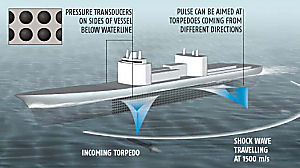
As an add-on, here is a photo of a new toy the Navy may install on some of their ships to disable torpedoes. This could cause some serious problems for our flippered friends.

Evolution of the Devil Facial Tumor Disease


Since the late 1990’s the Tasmanian devil, Sarcophilus harrisii, has been plagued by a contagious form of cancer, known as the Devil Facial Tumor Disease. The facial disease has had a drastic effect on the Tasmanian devil population, leading to the species being added to the endangered list in 2008. Since 1996, the contagious disease has killed off roughly 80 percent of the population and could ultimately lead to the extinction of the Tasmanian devil.

The Devil Facial Tumor Disease first presents itself as small lesions or bumps in or around the mouth of the Tasmanian devils. These then grow into large tumors around the mouth and face, which impede the devils ability to eat. More often than not, the infected Tasmanian devils die from starvation, but some also die due to the tumors metastasizing and affecting vital organs. Either way, it is estimated that once an individual contracts the contagious cancer, it usually does not live longer than six months. Although this seems like a short time frame, the problem with this disease being contagious, coupled with the Tasmanian devils biting behaviors, is that it allows time for the cancer to spread further throughout the population.  

Interestingly enough, scientists have been able to trace the cancerous genes all the way to a single female Tasmanian devil. The cancer is highly contagious and has spread through the years through the bites between Tasmanian devils. Unlike previously thought, Devil Facial Tumor Disease does not change the actual genes themselves, but rather, affects how the genes turn on and off.  Furthermore, the interesting aspect about this specific cancer is that it is evolving within the species. Though, it is still unknown whether these changes are causing the cancer cells to become more aggressive or less aggressive, leading to benign tumors. Obviously, if the changes cause the cancer to become more aggressive, it would have a drastic effect on the Tasmanian devil population, which could ultimately lead to the species’ decline to extinction. On the other hand, if the way the genes evolve causes the cancer to become less aggressive, it could possibly give the population of Tasmanian devils a fighting chance.

Happiness in Bhutan

Forgive a repeat but I didn't get a chance to mention Bhutan again today and I wanted to highlight an interesting paper from 2010 that perhaps raises more questions than it answers. GDP and its enemies: the questionable search for a happiness index by Johan Norberg.


Last week I briefly mentioned Bhutan, a small country on the Eastern end of the Himalayas, as a country that has a lot of forest left. Bhutan is largely a budhist country and it is one of the few countries in the world to have embraced happiness. Bhutan is the happiest country in Asia and the eighth-happiest in the world based on a global survey. The government must consider every policy for its impact not only on  Gross Domestic Product, but also on GNH: "Gross National Happiness".

I mention Bhutan and happiness because it illustrates why this topic is important to conservation - Bhutan's gross national happiness measure has led to decrees  that 60 percent of the country remain covered in forest.

However other measures, whether you agree with them or not, involve a lot more government intervention than most Americans would he happy with. The examples are from this BBC article in 2006 but there are lots of articles on Bhutan and its quest for happiness - just google Bhutan and happiness.


  • Bhutan was the last nation in the world to introduce television in 1999.  Recently they banned a number of channels including international  wrestling and MTV, which they felt did little to promote happiness.


  • Bhutan has banned plastic bags and tobacco on the grounds that they make the country less happy.


  • Bhutan had one traffic light but they got rid of it because people found it frustrating. There's a person directing traffic there now.

  • But the paper cited above by Johan Norberg raises some problematic questions:

    If we replaced GDP with some sort of well-being measure, we would have to come to an agreement on what well-being is; and there is a risk that governments would be tempted to take a one-size-fits-all approach and try to make us all wear the result. We have seen how the Bhutanese happiness index has been used as a rationalisation to force minorities to live in the preferred way. Admittedly, this is an extreme example, but it is interesting that it is so often used as a positive example by those who seek to do away with GDP.


    Wednesday, November 7, 2012

    Laos Begins Construction of Mega Dam


    Laos has started construction on a $3.5 billion dam on the Mekong River. The Xayaburi dam, paid for by a Thai company,  is expected to boost development in Laos (one of South-east Asia’s poorest countries) through the generation and export of electricity (Thailand has pre-bought a majority of the electricity). 


    Cambodia and Vietnam, which are located downstream from Laos, have expressed concerns that the dam will negatively affect fish populations and the fishermen who depend on them. Environmentalists are also wary of the construction, as the large dam will certainly have a range of impacts on both wildlife and physical processes (such as sediment deposition). In response to criticism, $100 million in modifications have been made to the original design. Included are ladders to aid fish traveling upstream and flaps to allow some sediment flow. The opposition, however, maintains that construction should not begin until further studies are conducted on the potential impacts of the dam. The construction of several more dams is proposed on the Mekong (in China, Laos, Vietnam, and Cambodia).


    Traditionally, countries located on the Mekong have consulted each other prior to any development on the river. Laos insists that they have dealt with the objections voiced by Cambodia and Vietnam. Deputy energy minister Viraphonh Virawong said, “we can sense that Vietnam and Cambodia now understand how we have addressed their concerns.” There has not yet been a formal reaction from Cambodia or Vietnam.

    It seems that Laos is pushing ahead aggressively with construction. There is probably pressure from the Thai company paying for the dam as well as the pressure of developing a poverty-striken economy. The poorly studied consequences of this dam could affect the livelihoods and food supply of millions of people, and the magnitude of such impact leaves little room for argument in favor of immediate construction.

    Read the full story here. 

    Turtle Excluder Device


     Here's that turtle excluder device in action. Interesting how the design has been modified a bit from earlier versions to allow much larger objects, tires and logs, to 'escape' the net. This then becomes a bigger selling point to fishermen as it reduces damage to the nets and also fuel costs.

    Tuesday, November 6, 2012

    Ecological services?


    A broken beaver dam is being blamed for the flooding of homes in Washington.

    No word yet as to the fate of the beavers... (with apologies to Gary Larson).